


Applicable to investigating deep-foundation structures like: Bridges, Piers, jetties, towers and buildings, we conduct accurate Pile integrity testing using Low-strain technique, Sonic echo / Impulse response pile integrity testing (PIT) in accordance with ASTM D5882-16 and AS 2159-2009 industry standard procedure, data acquisition, processing and reporting.
The method is effective in accurately determining Depth, geometrical and condition parameters of unknown deep foundation or piles, hence handy for quality verification of on-going pile-foundation works.
Objectives of Pile Integrity Testing
Quality Control Checks (QA/QC), determining presence (or absence) and location of defects in Pile foundations including the following
- Necking and Bulbing in piles
- Cracks and discontinuities in piles
- Depth to defect
- Plot Changes in pile size or material with depth
- Pile head stiffness
- Pile shaft mobility
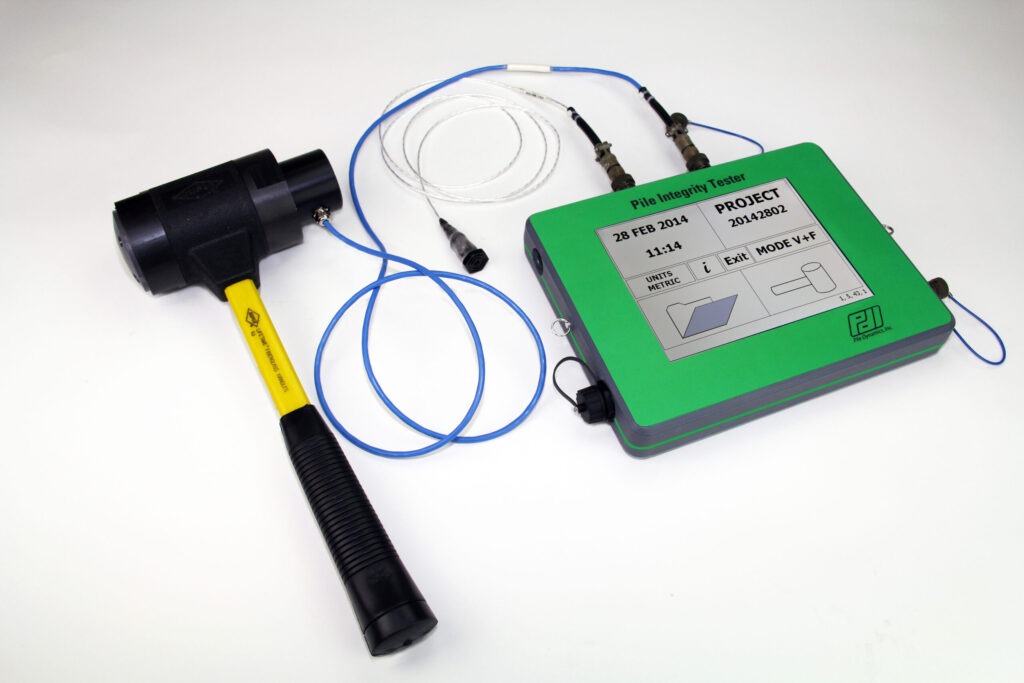
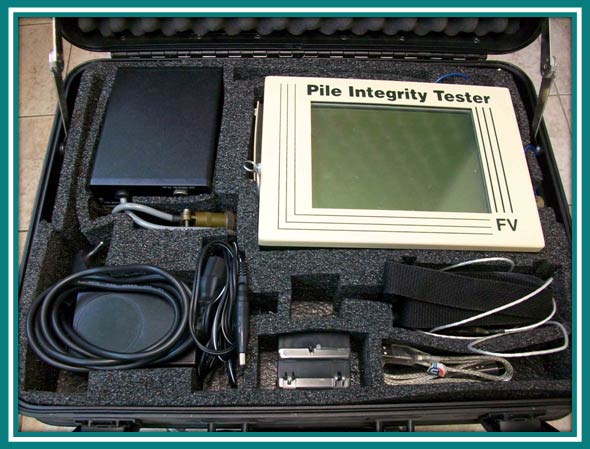

Data Analysis
Based on stress wave propagation and reflection theory; a stress wave (compression / tension) in a uniform rod is reflected if the wave encounters an impedance change or discontinuity. Structurally sound shafts made with concrete should have:
• Reflection wave from shaft toe with only minor variations of the record amplitudes between impact and toe reflection.
• Sound shafts may also be indicated by negative velocity reflections which are often caused by bulges (softer soils), auger-wobble or excess grout pressure allow for an
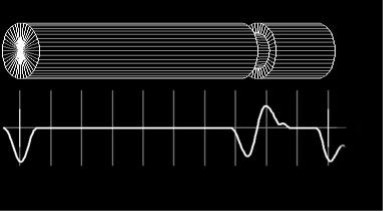
Characterisation of Defect(s) and Severity
QA/QC: The characterization and location of defects is only as good as the accuracy of wave velocity determination and quality of the pile. Results may be categorized into:
- AA: Sound shaft integrity indicated a clear toe reflection (within accuracy limits of design length and wave speed).
- BB: No major defect indicated (neither reflections from pile size changes, nor defects nor a clear toe response).
- ABx: No major defect indicated to a depth of x (m) due to the limitation of PIT, interpretation of the full length is not possible. A large bulge or high soil resistance may cause the shafts fall into this category.
- PFx: Indication of a probable flaw at approximate depth of x (m) reflection corresponding to an unplanned reduction in size or material quality and toe reflection is apparent.
- PDx: Indication of a probable defect at an approximate depth of x (m), major reduction of size or material defect cause a strong reflection